Start with how you want it to wear
Before you read a single reference number, decide on the size and the feel. Rolex makes the same family in several case sizes, and that choice changes the watch more than any spec. The Datejust, for example, has been made in 26, 31, 36 and 41 millimeter sizes. A 36 sits close and quiet under a cuff. A 41 has more presence and reads sportier on the wrist.
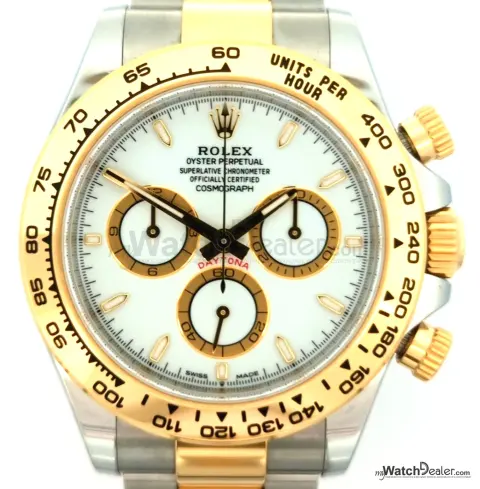
The sports watches have their own personalities. The Submariner is a diver with a rotating bezel and a bracelet built for daily wear. The GMT-Master II adds a second time zone and a two-color bezel. The Daytona is a chronograph with three small dials and screw-down pushers. The Day-Date is the dressy one, made only in precious metal, with the day spelled out in full.
If you can, try a few sizes on your wrist before you commit. If you are buying from a distance, measure your wrist and ask the seller for the case diameter, lug-to-lug length and thickness.
Reading the reference number
The reference number is the model's name tag. It is engraved on the case between the lugs, and it tells a dealer which watch it is, in which metal, in which generation. You do not need to memorize the system, but a few patterns help.
Five-digit references such as 16233 or 16013 belong to the earlier generation of Datejusts. Six-digit references such as 116334 or 126334 are newer. On the Submariner, for instance, the 16610 era ran from 1989 to 2010, the 116610 brought a ceramic bezel in 2010, and the 126610 arrived in 2020 with a 41 millimeter case.
The last digits of the number usually point to the metal. A 116610 is steel, while a 116613LN is steel with yellow gold. Letters at the end often point to the color: LN for a black bezel, LV for green, LB for blue. Newer listings also add a dash and four more digits, as in 126610LV-0002, which identifies the exact dial and finish combination. Ask the seller to confirm the full reference, not just the model name, because two watches with the same name can be quite different.
Steel, two-tone or gold
Steel is the most practical choice, and the one most people picture first. Rolex now calls its steel Oystersteel. Two-tone, which Rolex calls Rolesor, pairs steel with yellow, white or Everose gold, usually on the bezel, center links and crown. Full gold and platinum are heavier, warmer and more formal.
Metal matters when you compare. A gold watch carries the value of its metal and its stone setting along with the name on the dial, so it does not belong in the same comparison as a steel one. If a vintage piece looks gold, ask whether it is solid gold, gold-capped or plated, and get the answer in writing. If a watch has diamonds, ask whether Rolex set them at the factory or someone added them later.
Is the dial, bezel and hands original
Originality is where careful buyers spend most of their attention. A watch that has kept its factory dial, hands and bezel is easier to value and easier to resell. A watch with replaced parts can still be a good one, but it should be described honestly, and priced as what it is.
Look at the dial under good light. Printing should be crisp and evenly spaced, with no thick or wavering edges. The luminous material on the hands and the hour markers should age in a similar way, because new hands next to old markers will not match. On a date model, the date window and the magnifier should line up cleanly.
Bezels are worth a close look too. Before ceramic arrived on the steel Submariner Date in 2010, bezel inserts were aluminum, and they fade or scratch with age. A replaced insert is not a flaw, but the seller should say so. Ceramic bezels resist fading, so the question there is chips and cracks. Ask for close photographs of the dial, bezel and hands, taken in daylight.
Bracelet stretch and case wear
Rolex bracelets are well made, and they still wear. Over the years the pins and links loosen, and the bracelet gets longer. The easy test is to hold the watch by the clasp and see how much the bracelet sags and rattles. A bracelet that has stretched can be serviced, but it is a fair point to raise before you buy.
Ask whether the bracelet has been shortened, and whether the removed links come with the watch. Ask how many are left, because they matter if you ever need to resize it again.
Check the case for polishing. Repeated polishing softens the sharp edges of the lugs and thins the hallmarks. One careful polish is normal on a watch that has been worn for decades. Ask for photographs of the lug tops and sides, and of the engraved reference number, so you can see how crisp the case still is.
Box, papers and service history
A full set means the original box and the original papers, including the warranty card, that came with that watch. It makes a watch easier to place and easier to sell later, but it does not prove that the watch is genuine, and it does not make a worn watch unworn. Our separate guide to box and papers goes through what each combination means.
Service history is just as useful. Ask when the watch was last serviced, by whom, and which parts were replaced. Rolex service centers can replace dials, hands and bezels as part of a service, so a service invoice is useful but it does not tell you whether the parts are original. Ask for the invoice and read the parts list.
Condition words are not standardized. 'Excellent' from one seller can mean something different from the next. Look at photographs of the actual watch from several angles, and ask what the word means in this case. On our listings we use pre-owned for worn watches and unworn for watches that have not been worn.
Red flags worth walking away from
Most problems announce themselves to a patient buyer. These are the ones to watch for.
- Stock photographs instead of pictures of the watch you would receive.
- A seller who will not show the caseback, the engraved reference, or close-ups of the dial.
- A price far below what similar pieces are listed at, with no explanation.
- Vague answers about replaced parts, polishing, or service history.
- No written return terms, or terms that change when you ask a question.
- Pressure to pay by a method that cannot be reversed before you have seen proper photographs and terms.
- Papers whose serial or reference do not match the watch in front of you.
What to ask the dealer
A good dealer likes these questions, because the answers are easy to give. Ask them before you pay, and keep the replies in writing.
- What is the full reference number, and does the paperwork match the watch?
- Are the dial, hands, bezel and crystal original? Has anything been replaced?
- Has it been polished, and when was it last serviced?
- What comes with it, exactly: box, papers, extra links?
- What are the return terms, and what warranty do I get, and from whom?
- How is it shipped, insured, and who signs for it?
How we answer those questions
We are an independent dealer, not affiliated with Rolex. That means there is no warranty from the brand when you buy from us. Every watch we sell is checked on our own bench and comes with a 2-year store warranty on the movement, a written appraisal certified through MyLuxApp, and a presentation box. Unworn in-stock pieces can be returned: you have 7 days from delivery to start a return. Shipping is free, insured and overnight on orders of $1,000 or more, with a flat $55 fee below that, and a signature is required. The full terms are on our returns, warranty and shipping pages.
Questions
Is a Rolex with no papers still worth buying?
It can be. Papers help with resale and with the story of the watch, but a watch without them is judged on its own condition and originality. Ask the dealer to explain what has been checked on the watch itself, and see whether the terms of sale cover you.
Should I buy a Rolex that has been polished?
Light polishing is common on older watches. What matters is how much metal is left. Ask for close photographs of the lug edges and the case sides, and compare them to an unpolished example of the same reference.
What does the reference number actually tell me?
It identifies the model, the generation and usually the metal. Letters and the dash suffix on newer references point to the bezel color and the dial. Always ask for the full reference, not just the model name.
Is steel always better than two-tone or gold?
No. Steel is the most practical, but two-tone and gold have their own following and their own price logic. Choose the one you will enjoy wearing, and compare watches in the same metal.
How do I know a dial or bezel has not been replaced?
You rarely know for certain from photographs. Look for crisp printing, matching lume on the hands and markers, and a seller who is willing to say what has been replaced. A watch our bench has checked is described as it is.
Can I buy a Rolex from you without visiting?
Yes. We ship insured overnight with a signature required. If you would rather see the watch first, you are welcome to visit our desk in the downtown Los Angeles jewelry district by appointment.