From the desk · July 23, 2026
How to read the Tudor Submariner lineage, judge originality, and buy the right vintage reference with confidence.
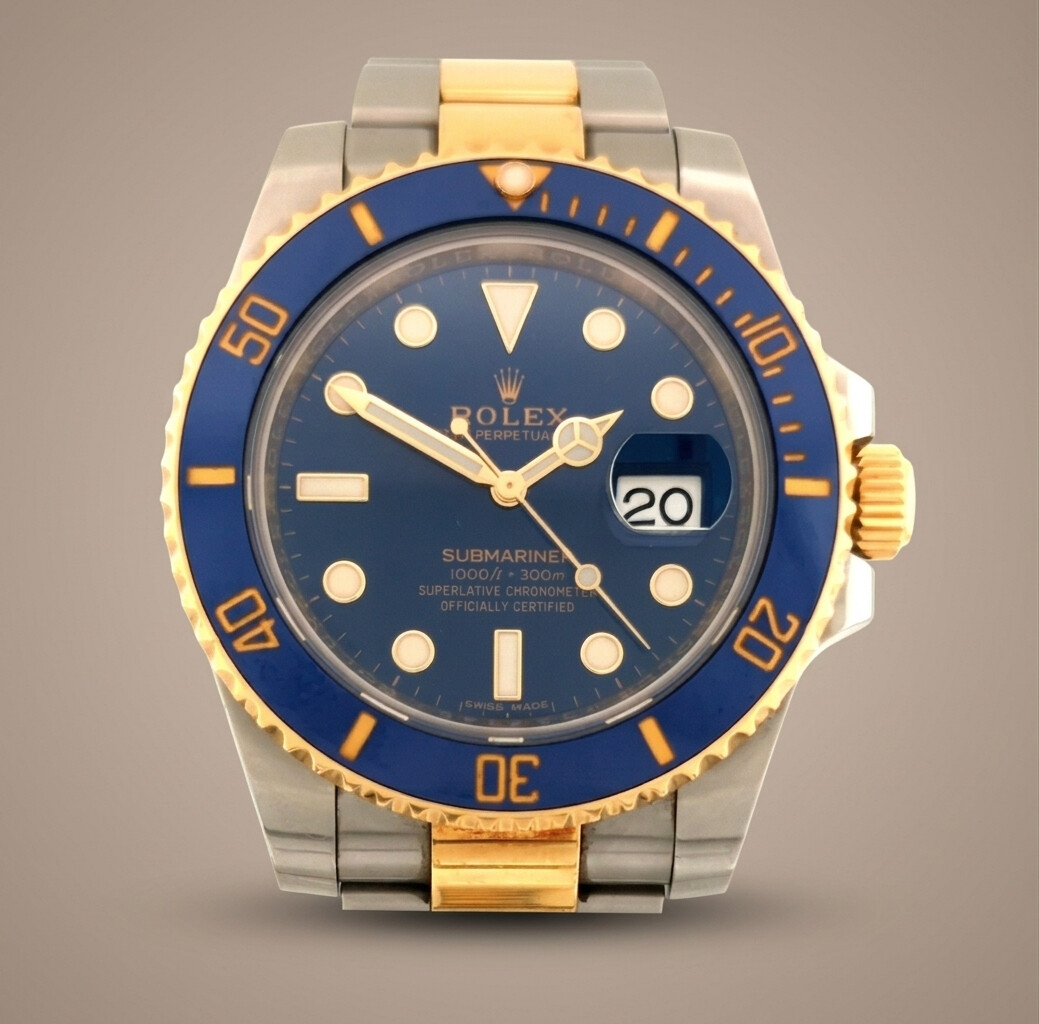
The Tudor Submariner is the diver that let a Rolex-quality tool watch reach a wider audience. From 1954 until it was quietly retired at the end of the 1990s, Tudor built these watches inside genuine Rolex Oyster cases, with Rolex-signed crowns and Oyster or riveted bracelets, while fitting robust ETA-based movements instead of Rolex calibres. The result is a watch with the same wrist presence and sea-going credibility as its more famous cousin, at a fraction of the entry price. Collectors now treat the best examples, especially the blue "snowflake" models, as blue-chip vintage pieces rather than budget alternatives.
The family runs deep, so learn the reference tree before you shop. The earliest guns are the 7922, 7923 (a rare hand-wound version), 7924 "Big Crown," and 7928, all no-date divers with rounded cases. The 7016 (no date) and 7021 (date) arrived at the turn of the 1970s and introduced the look most buyers chase. Later four-digit and five-digit references, the 9401, 9411, 94010, 94110, then the 79090, carry the design into the 1980s and 1990s.
Case diameters sit around 37mm on the very early pieces and settle at a modern-feeling 40mm on the 7016, 7021, and everything after. Lug width and bracelet fitment vary across the run, so confirm the correct riveted, folded, or solid-link Oyster bracelet for the reference. The 7021 holds a place in history as the first automatic dive watch with a date.
Two dial-and-hand styles define collecting here. Pre-1969 watches use standard round-lume markers and Mercedes-style hands shared with Rolex, often carrying the early Tudor "rose" logo. From roughly 1969 the shield logo appears, and Tudor introduced its signature: square hour plots and the angular "snowflake" hour hand. Snowflake examples came in black and in a deep blue that is the most sought-after configuration in the entire range.
Bezels are aluminum inserts, not the modern ceramic you will find on current dive watches, so expect honest fading and small nicks on originals. Both no-date and date layouts exist across the references. Lume was tritium through most of the production life, which now ages to warm cream or tan tones. A dial that still glows bright white on a 1970s watch deserves scrutiny.
Originality drives everything, and the vintage Submariner market is full of assembled or "married" watches. Confirm the dial has not been refinished; look for correct font, logo type for the year, and even, period-correct patina. Snowflake hands must match the reference and era, and they are frequently swapped, so verify they belong. Check that the bezel insert, crown, and bracelet are correct for the reference rather than a mix of donor parts.
Inspect the case for over-polishing. Sharp lug bevels and a defined case edge add real value, while soft, rounded lugs signal a heavily buffed watch. Make sure the crown is Rolex-signed and screws down cleanly, and that the movement is the correct ETA-based calibre with clean service history. Military-issued pieces, including French Marine Nationale examples, carry engraved casebacks and command large premiums, which also makes them the most faked, so demand documentation. When possible, buy from a seller who has serviced and pressure-tested the watch and can show the work.
Secondary-market value keys off reference rarity, dial color, hand style, and condition, in that rough order. Later date models with standard hands sit at the accessible end of the range. Snowflake examples step up sharply, and blue snowflake dials in honest, unpolished condition sit at the top of civilian pricing. Early Big Crown 7924 and hand-wound 7923 pieces trade in their own rarefied bracket, and confirmed military watches move well beyond standard collector money.
Condition premiums are real but only on genuine parts. A crisp original dial and matching bezel can double the value of an otherwise ordinary reference, while replaced parts erase most of that gain. Full sets with original bracelet, papers, and boxes are scarce and add a further layer. For context, strong all-original vintage examples frequently trade in the high four figures, and clean snowflakes push into five figures. Budget for a service if the watch has not been touched in five years.
For a first buyer who wants the icon, target a black or blue snowflake 7021 or 9411 in original, unpolished condition and prioritize the dial and hands over paperwork. If you want the earliest DNA, chase a 7928 or 7924, but pay a specialist to authenticate it. Collectors building for the long term should weight originality and provenance above cosmetic perfection, because a correct, honest example holds value far better than a pretty franken-watch. Buy the specific watch in front of you, not the reference in the abstract.
The desk responds the same business day whenever possible.
