From the desk · August 8, 2026
A dealer's look at how the Monaco holds value, which references command premiums, and where the smart money sits today.
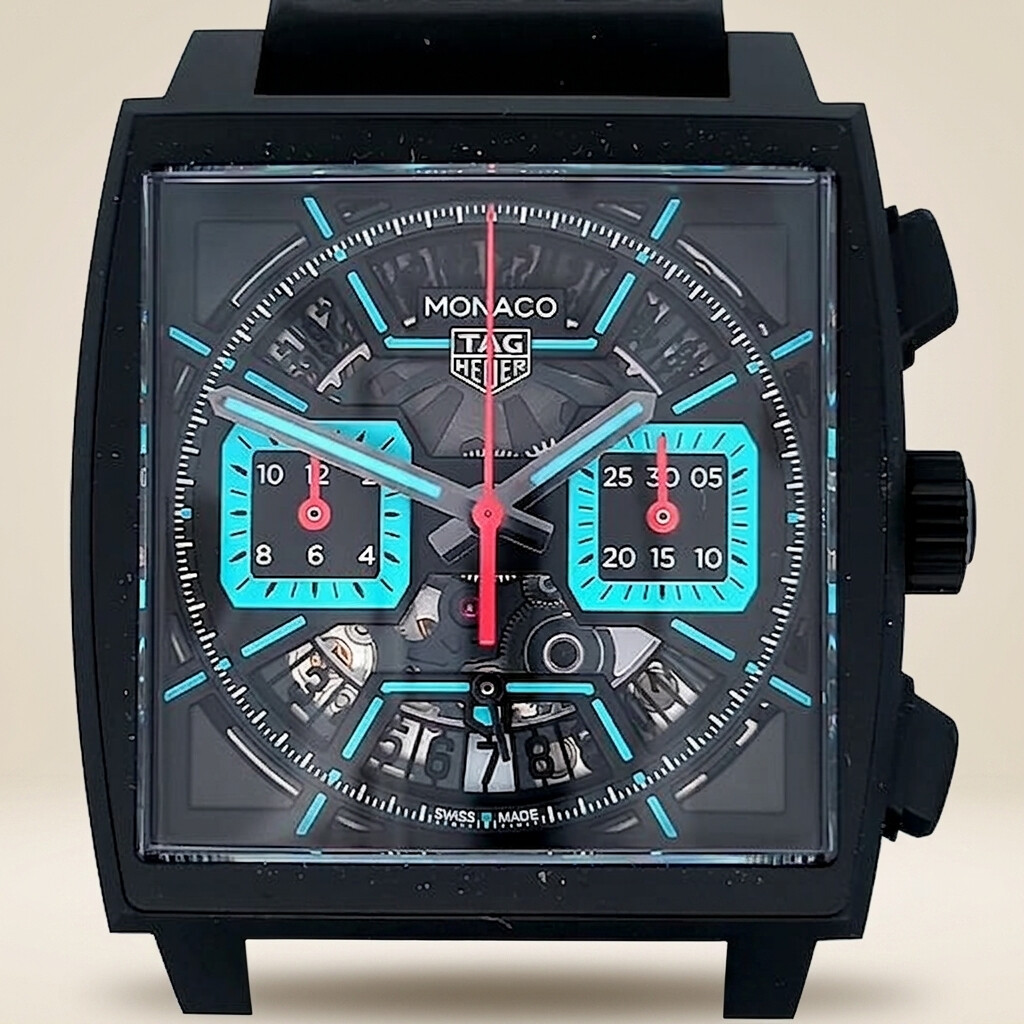
The Monaco is one of the few watches where the case shape does the heavy lifting. Launched in 1969 as the first square automatic chronograph, it built a following that has nothing to do with round-watch convention. That distinctiveness is exactly why its secondary-market behavior differs from a Carrera or an Aquaracer. Buyers either want the square case or they don't, and that binary demand shapes pricing more than any spec sheet.
As a group, the Monaco is a moderate value holder rather than a blue-chip appreciator. Standard steel calibre Heuer 02 models typically settle 10 to 25 percent below retail once they leave the boutique, then stabilize. That plateau is the important part. Unlike many chronographs that keep sliding, the Monaco finds a floor because supply is genuinely limited and the design has no direct competitor. Vintage and Steve McQueen-associated blue-dial pieces sit in an entirely different bracket, and limited or discontinued editions have consistently outperformed the standard line at resale.
Three factors move Monaco prices: the dial, the case material, and edition status. The classic blue dial with the left-side crown carries the strongest name recognition and generally the firmest resale, since it echoes the McQueen Le Mans watch. Gulf liveried and special-collaboration dials attract collector demand and trade above baseline. Movement matters too. Modern references running the in-house Heuer 02 command more than older ETA or Sellita-based Monacos, and the skeleton and titanium variants occupy the upper tier.
Material is where the current market gets interesting. The titanium Monaco, represented in our inventory by the reference CBL2184.FT6236, is a newer direction for the line. At 39mm on a titanium case with a black turquoise dial, black bezel, and rubber strap, this 2024 example shows where Tag Heuer is steering the collection: lighter, more contemporary, and less tied to the steel-and-blue template. Titanium models are produced in smaller numbers than standard steel, which supports value over time, and the turquoise-accented dial gives it separation from the sea of blue and black examples on the market.
The Monaco has cooled from the speculative highs that touched many chronographs a few years ago, and that is healthy for a buyer. Prices are rational again. Standard Heuer 02 references trade in a broad band depending on condition and dial, while special editions and rarer material variants hold firmer and move faster. The square case is polarizing, which keeps casual flippers away and leaves a more committed buyer pool. That translates to steadier pricing and fewer wild swings than you see in round steel sport watches.
Unworn, current-production pieces with full kit remain the easiest to sell and the slowest to depreciate. Our titanium example at $11,200 sits in that unworn, box-and-papers tier, which is the segment that protects capital best if you decide to move it later.
For value shopping, the sweet spot is a clean, complete Heuer 02 reference bought below retail. The in-house movement is the modern benchmark, so paying up for it rather than settling for an older ETA-based Monaco is money well spent. Titanium and skeleton variants ask a premium, but they also concentrate scarcity, which is what defends resale. The turquoise dial titanium model illustrates the logic: a limited-material case plus a dial you won't see on every wrist means fewer directly comparable listings undercutting you at sale time.
Avoid over-polished cases. The Monaco's flat, brushed surfaces and sharp corners are difficult to restore correctly, and a rounded case edge kills value permanently. That single check separates a strong buy from a compromised one.
Start with the case corners and bezel edges. Crisp, defined geometry indicates an honest, unpolished example. Confirm the movement matches the reference. A modern Monaco should carry the Heuer 02 with its recognizable finishing through the caseback where applicable. Verify the dial variant against the reference number, since dial color and layout are the primary price drivers and the most commonly misrepresented detail. On rubber-strapped pieces like the titanium reference, inspect the strap and deployant, since original straps are correct and add to completeness. Full box and card matter more on the Monaco than on higher-volume models because they confirm edition and production year.
The honest read: the Monaco is a design purchase first and an investment second, but it is not a value trap. It depreciates modestly, then holds. The best-defended examples are unworn current references, in-house movement variants, and scarcer materials or dials. The titanium 39mm with the black turquoise dial checks the material-scarcity and unusual-dial boxes while staying in current production, which is a sensible combination for a buyer who wants the icon without the vintage-market guesswork. Buy a complete, unpolished piece at or below retail and the Monaco rewards you with an object that keeps both its shape and most of its money.
A firm cash offer within one business day.
