From the desk · July 22, 2026
Two watches can share a name and a reference family and still sit a millimeter apart — here's how that millimeter gets caught on our bench.
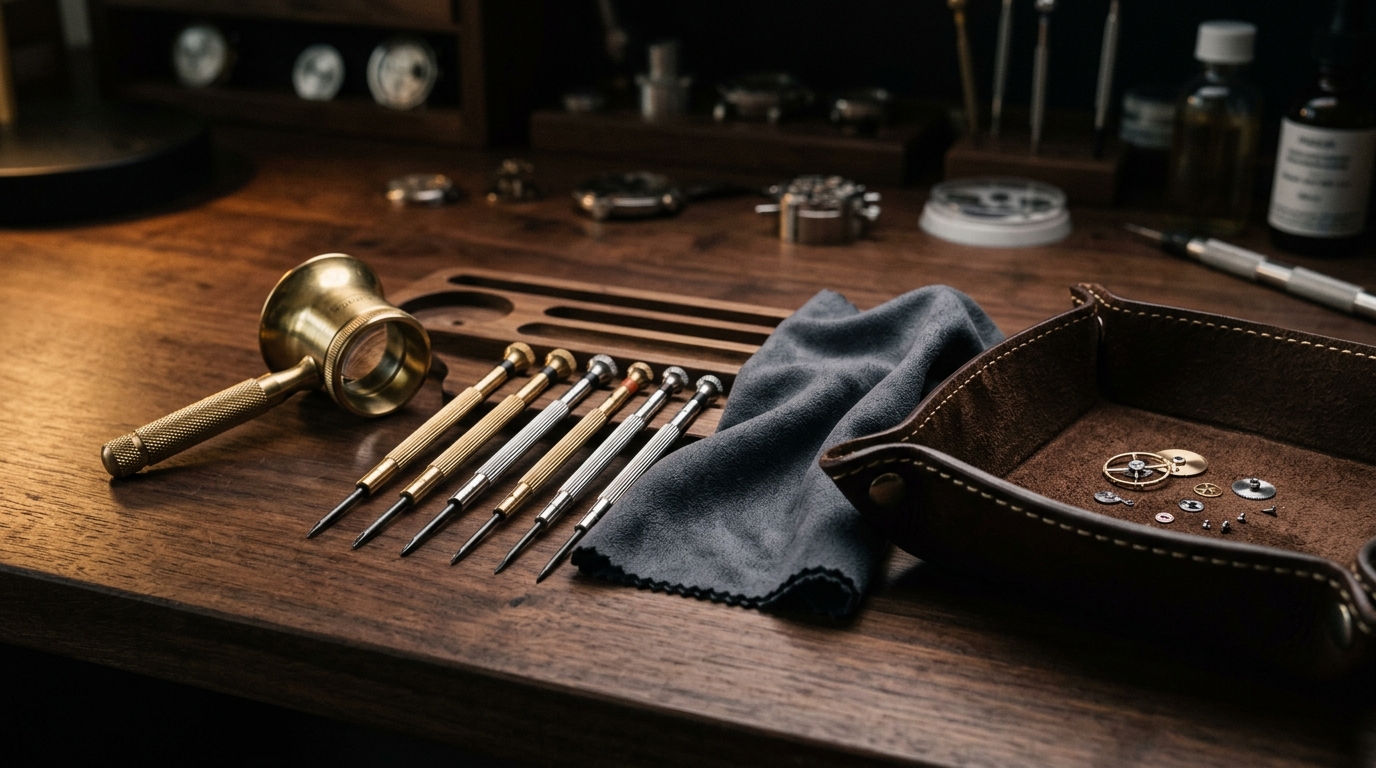
Most people picture authentication as a glance at the dial and a nod. It isn't. When a piece comes in, our watchmakers put it on the bench and take it apart down to what the movement actually is versus what the case says it should be.
Here's where sibling sizes matter. A lot of models run in two case widths off the same design — say a 36mm and a 40mm, same crown, same handset, same lume. From three feet away they read as one watch. On calipers they don't. The smaller case carries a different movement seat, a different dial diameter, sometimes a different reference stamped between the lugs. Parts from the 40 don't belong in the 36, and a dial swapped from one to the other sits a hair off center.
That gap is exactly where a wrong watch hides. Someone marries a serviced movement into the more valuable size, or fits a dial that was never cut for that case. It photographs fine. It fails on measurement.
So we measure. Case width, lug width, crystal, movement caliber against the reference the case claims. We check the crown threading, the date font, the way the seconds hand lands on the markers. If a component is right for the sibling but wrong for this one, it shows.
We are a pre-owned dealer in downtown LA. We are not the brand, and we don't hand you a factory paper. What we hand you is a watch our own watchmakers took apart, confirmed, and put back together, backed by our store warranty. That's the trade: we do the checking here, before it goes up, so you're not doing it at home after.
Thirty-eight years downtown runs on that. A watch that leaves wrong doesn't come back as a return. It comes back as a reputation.
The desk responds the same business day whenever possible.
