From the desk · July 22, 2026
Case thickness is the spec that decides it. Movement generations, dial pattern, and the reference to want.
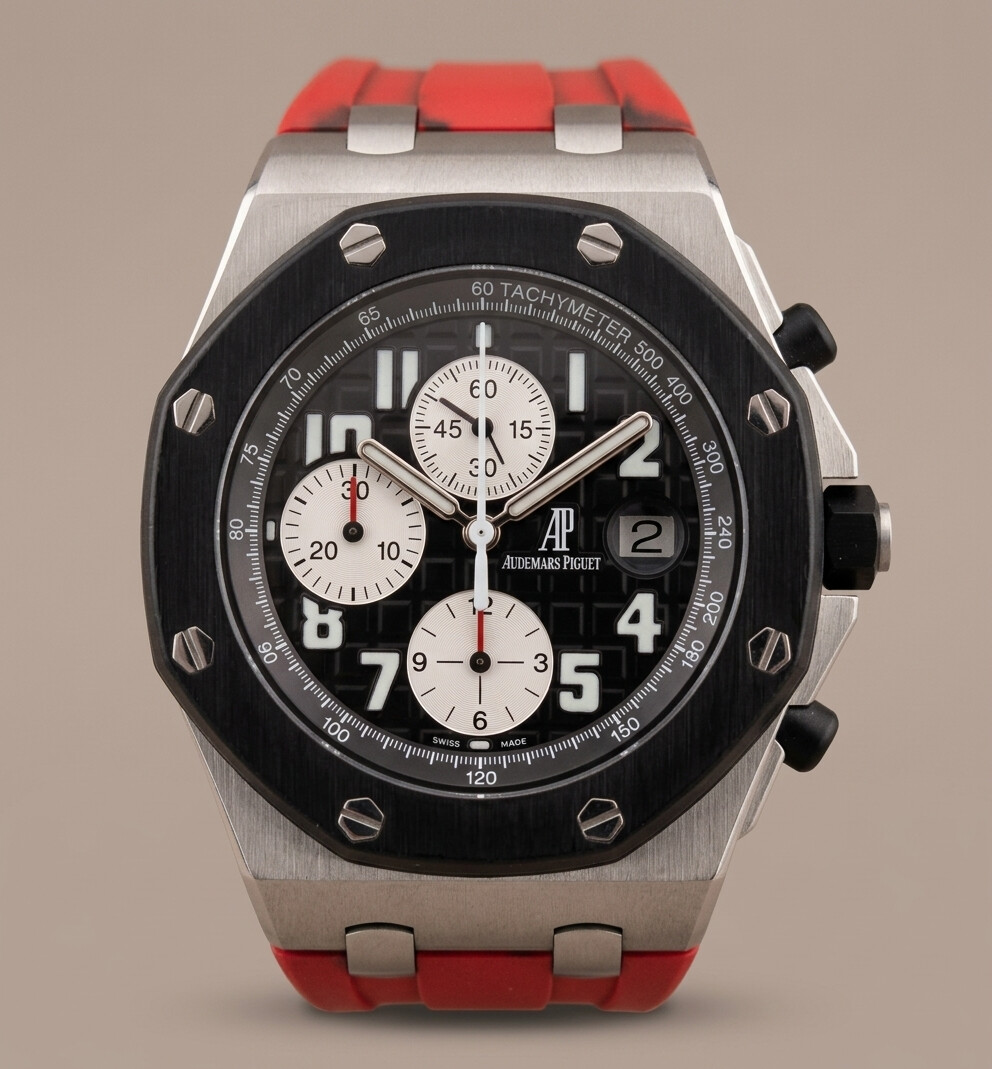
42mm across and roughly 14mm thick is where the Royal Oak Offshore lives, and that thickness is the one spec that decides whether it works for you. The Offshore is not a dress Royal Oak scaled up; it is a heavier, taller case with a thicker bezel and a rubber-gasketed feel that reads far bigger than the number on paper.
Case and movement specifics reward reading closely. Early Offshores used a 42mm steel case with a modular chronograph caliber, while later 26470-generation pieces moved to the in-house 3126/3840. The Mega Tapisserie dial pattern is larger-checked than the standard Royal Oak, the subdials sit lower, and the screwed-down bezel keeps its eight hexagonal screws aligned when the work is honest.
On the wrist it reads as presence. A 7-inch wrist carries the 42mm cleanly; below 6.5 the case overhangs. The rubber crown and pushers add grip and heft, and the brick bracelet or rubber strap swing the weight noticeably. This is a watch you feel all day, which is the point for some buyers and a dealbreaker for others. Bracelet and strap sets change the money too, since an original bracelet with the matching clasp adds real value and a watch sold on rubber alone should cost less.
Which reference to want comes down to movement and dial. The 26470 generation with the in-house 3126 is the value sweet spot: modern reliability, sharp Mega Tapisserie, and a wide color run. Check the screw alignment, the tapisserie crispness, and that the chronograph resets to zero cleanly. Confirm the case has not been over-polished at the bezel edges, where the Offshore loses its lines first and where a refinish drops what you should pay.
Buy the steel 26470ST with a full set and honest, unpolished bezel screws; it is the Offshore that does the most and asks the least at resale.
On the desk now
Live inventory for this model — updated continuously as pieces arrive and sell.
A firm cash offer within one business day.
