
Watch Winders: When They Actually Earn Their Keep
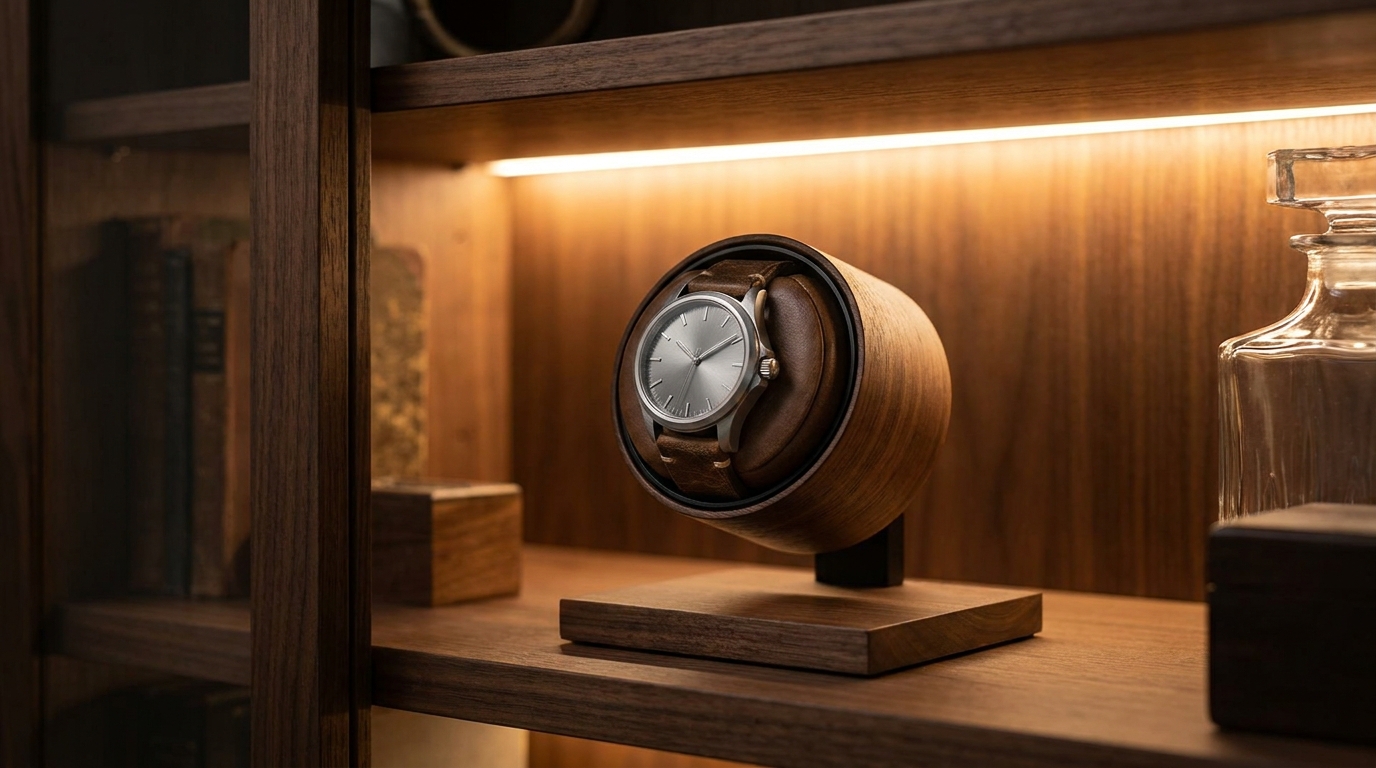
Watch winders sit in a strange corner of the hobby. They look serious, they cost real money, and they promise to take care of something that, for most owners, doesn't actually need taking care of. Before you click buy on that six-slot rotating cabinet with the leather trim, let's talk about whether you need one at all.
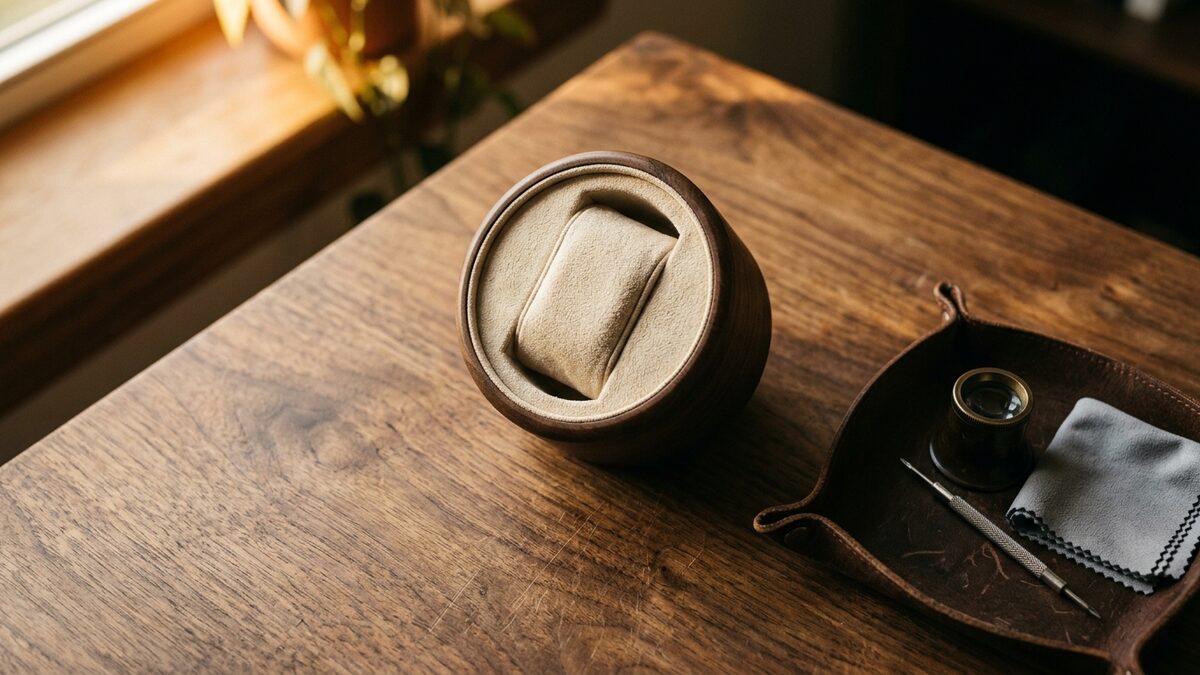
The pitch for a winder is simple. Your automatic watch needs motion to keep running. A winder provides that motion when your wrist isn't around to do the job. Pull the watch off the winder, strap it on, and it's already wound, set, and ticking. No date wheel spinning, no crown fiddling, no second-hand hacking against a time signal. Convenient, sure. Necessary? Almost never.
For a single automatic that you wear most days, a winder is pure theater. You take the watch off at night, you put it on in the morning, and the rotor handles the rest during your commute, your gym session, your walk to lunch. The watch never stops because you never stop wearing it. A winder in this scenario is a $300 solution to a problem you don't have.
The picture changes when the watch in question has complications that punish you for letting it run dead. A perpetual calendar is the textbook case. Reset one of those, and you're potentially navigating a multi-step ritual involving recessed pushers, a stylus, and a manual that reads like assembly instructions translated three times. Some perpetuals require setting the date, day, month, leap-year cycle, and moonphase in a specific order, with restrictions on when during the 24-hour cycle you can advance certain functions. Miss a step, and you can damage the calendar works. For a watch like that, keeping it wound is genuinely sensible. Annual calendars are less punishing but still annoying. GMTs and chronographs? Trivial to reset. No winder needed.
Collections of three or more, and the rotation question
If you own a handful of automatics and rotate through them, the math gets more interesting. A watch worn one day a week spends six days losing time, and every Sunday you're resetting a date that's now five days behind. Multiply that by four or five watches and you've turned your collection into a part-time hobby of crown-pulling. A winder solves this, but so does a different approach: just let the watches run dead and reset only the one you're wearing that day. Quartz owners do this without complaint. Mechanical owners can too.
The honest case for a winder kicks in around the point where you have a perpetual or annual calendar in heavy rotation, or where you simply want the convenience and have the budget to indulge it. There's nothing wrong with buying a winder because you like the idea of your watches being ready to go. Just don't pretend it's maintenance. It's a luxury accessory for a luxury accessory.
Now for the myth that won't die: winders wear out movements. The reasoning goes that constant rotation puts unnecessary cycles on the mainspring and gear train, accelerating wear. This sounds plausible until you remember that the alternative is the watch on your wrist, where it experiences the same rotation plus shocks, temperature swings, magnetic exposure, and whatever you accidentally bang it against. A movement designed to run continuously on a wrist will run continuously on a winder without complaint. Service intervals are driven primarily by lubricant degradation, which happens whether the watch is moving or sitting still. The winder isn't the villain.
What actually matters in a winder, if you're buying one
Three things separate a winder worth owning from a noisy plastic box that will annoy you within a week. First, the motor. You want something quiet enough that you can sleep in the same room as the winder running. Cheap units use small DC motors that whine; better units use whisper-quiet steppers and isolate the mechanism with rubber dampers. If you can hear it from across the room in a quiet house, it goes back.
Second, programmable turns-per-day and direction. Different movements have different winding requirements. A typical automatic wants somewhere between 650 and 950 TPD, in either clockwise, counterclockwise, or bidirectional rotation depending on the rotor design. A winder that only offers one TPD setting at one direction is making your decision for you, and it'll be wrong for some of your watches. Look for a unit that lets you set TPD in increments and switch direction per slot.
Third, rest periods. A good winder doesn't run continuously. It cycles in bursts, completes its TPD allotment, then idles for hours before resuming. This mimics natural wear patterns and is easier on the motor itself. Continuous-rotation units exist and they're fine for the watch, but they're harder on the winder's own mechanism over years of use.
The case for leaving a watch dead in the box is stronger than the watch industry wants to admit. A mechanical watch sitting still in a dry, room-temperature drawer is in a stable state. The lubricants aren't degrading any faster than they would on a winder. The mainspring isn't suffering from being relaxed. When you want to wear it, you wind the crown thirty times, set the time, and you're back in business in under two minutes. For most watches, most of the time, that's the right answer.
Buy a winder if you have a perpetual calendar you actually wear, or if you have the budget and want the convenience. Skip it if you're buying it because you saw one in a watch video and now your three-piece collection feels naked without one. The watches will be fine either way. Your wallet, less so.