
Watch Power Reserve Explained: What It Means and Why It Matters
Power reserve is one of those spec-sheet numbers that sounds technical but actually answers a very human question: if I set this watch down on Friday night, will it still be ticking on Monday? Here is what the figure really means, how it changes across movement types, and why it quietly matters more than most people expect once you own more than one watch.
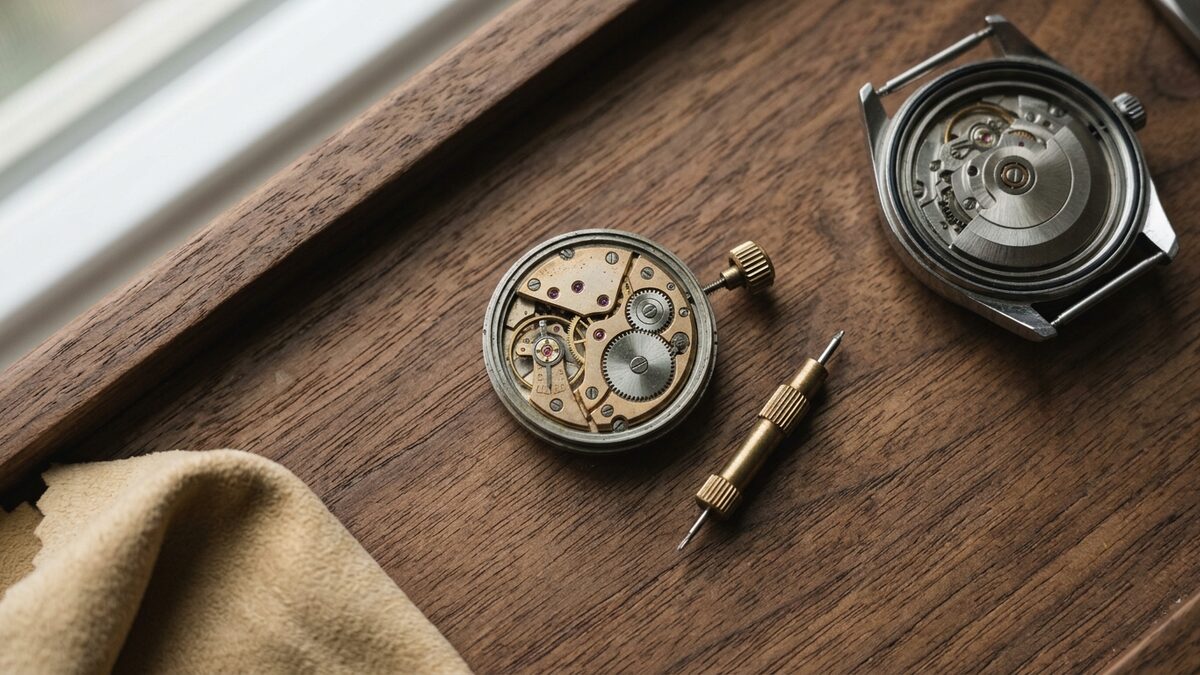
At its simplest, power reserve is the amount of running time a mechanical watch has stored up once it stops being wound. Think of it like the fuel gauge on a car, except the tank fills up through motion or a few turns of the crown rather than a pump. When the mainspring inside the movement is fully wound, it holds a set amount of energy. As that spring slowly unwinds, it drives the gears, and the number you see quoted, usually in hours, tells you how long the watch keeps accurate time before it winds down and stops.
You will see it written as something like 40 hours, 72 hours, or occasionally much longer. A 40-hour reserve means roughly a day and a half of running time from a full wind. A 72-hour reserve, often marketed as a three-day reserve, gives you a genuine long weekend of breathing room. That gap between 40 and 72 hours is small on paper but surprisingly meaningful in daily life, and it is one of the first things worth checking before buying a mechanical watch.
Quartz watches sit outside this conversation in a helpful way. A battery-powered quartz movement does not have a mainspring to run down over a weekend; it simply keeps going until the battery is depleted, typically over a year or more. So when people talk about power reserve, they are almost always talking about mechanical watches, whether hand-wound or automatic.
How power reserve differs across manual, automatic, and quartz movements
The three main movement types store and use energy in different ways, and understanding that helps you choose the right watch for how you actually live.
- Manual (hand-wound): You wind the crown yourself, usually once a day, to fill the mainspring. The reserve tells you how much grace you have if you forget. A hand-wound piece with a long reserve is forgiving; one with a short reserve rewards a consistent morning ritual.
- Automatic (self-winding): A weighted rotor spins as your wrist moves, topping up the mainspring throughout the day. If you wear it daily, it stays wound on its own. The reserve matters most on the days you do not wear it, because that is the window before it stops.
- Quartz: No mainspring in the traditional sense, so the relevant figure is battery life rather than power reserve. Low maintenance, long-running, and unbothered by a weekend on the nightstand.
This is also why some watches include a small power reserve indicator on the dial, a little sub-gauge that shows how much energy is left. It is genuinely useful on hand-wound pieces and on automatics you rotate in and out of a small collection, since it tells you at a glance whether the watch needs attention before you strap it on.
So why do some movements store two or three days while others stop at a day and a half? It usually comes down to mainspring design, barrel size, and how the brand has tuned the movement. A longer reserve often means a larger or more efficiently wound barrel, and sometimes twin barrels working together. Neither approach is automatically better; it is a design choice, and a well-made 40-hour movement can easily outclass a poorly made 72-hour one on accuracy and finishing.
Why power reserve matters for a small rotation and what to check before buying
Here is where the number stops being trivia and starts being practical. If you own one automatic watch and wear it every day, the reserve is almost invisible; the rotor keeps it topped up and you rarely notice. The moment you own two or three watches and start rotating them, the math changes. A watch with a 40-hour reserve that you take off Friday evening will very likely be stopped and showing the wrong time by Sunday. A 72-hour reserve, on the other hand, comfortably survives a full weekend of sitting still, so you can pick it back up on Monday and it is still running, still roughly on time.
That single difference is why weekend-friendly reserves have become such a selling point. It is not about specs bragging rights; it is about how often you have to reset the time and date. If you dislike fiddling with the crown every Monday morning, a longer reserve is a real quality-of-life feature, and it is worth prioritizing when you compare pieces at a similar price.
A few things are genuinely worth checking before you buy. First, confirm whether the watch is manual or automatic, because that tells you whether you or your wrist does the winding. Second, look at the quoted reserve against your own habits: daily wearer, weekend rotator, or occasional dress-watch owner all have different needs. Third, if the watch has a date or other complications, remember that a stopped watch means resetting those too, which nudges the value of a longer reserve up further. Finally, treat the reserve figure as a fresh-from-service best case; older movements or ones due for maintenance may fall a little short, which is normal and not cause for alarm.
As for value, power reserve on its own rarely makes or breaks resale, but it tends to travel alongside the things that do hold value: considered movement design, good finishing, and a brand that services its calibers well. A longer reserve is a nice signal of a thoughtfully engineered movement, though it is only one line on the spec sheet.
The short version: power reserve is your watch's fuel gauge, it matters most when the watch is off your wrist, and a few extra hours can be the difference between a Monday reset and a watch that simply keeps time while you sleep. Once you own more than one, you will notice it every single week.