
Watch Dial Colors and Finishes Explained: Sunburst, Matte, Fumé, and…
Two watches can share the same color name on a spec sheet and still feel like completely different objects once they land on your wrist. The trick almost always lives in the dial finish, the surface treatment that decides how light bounces, pools, or gets swallowed. Learn to read those finishes and you stop shopping by color swatch and start shopping by character.
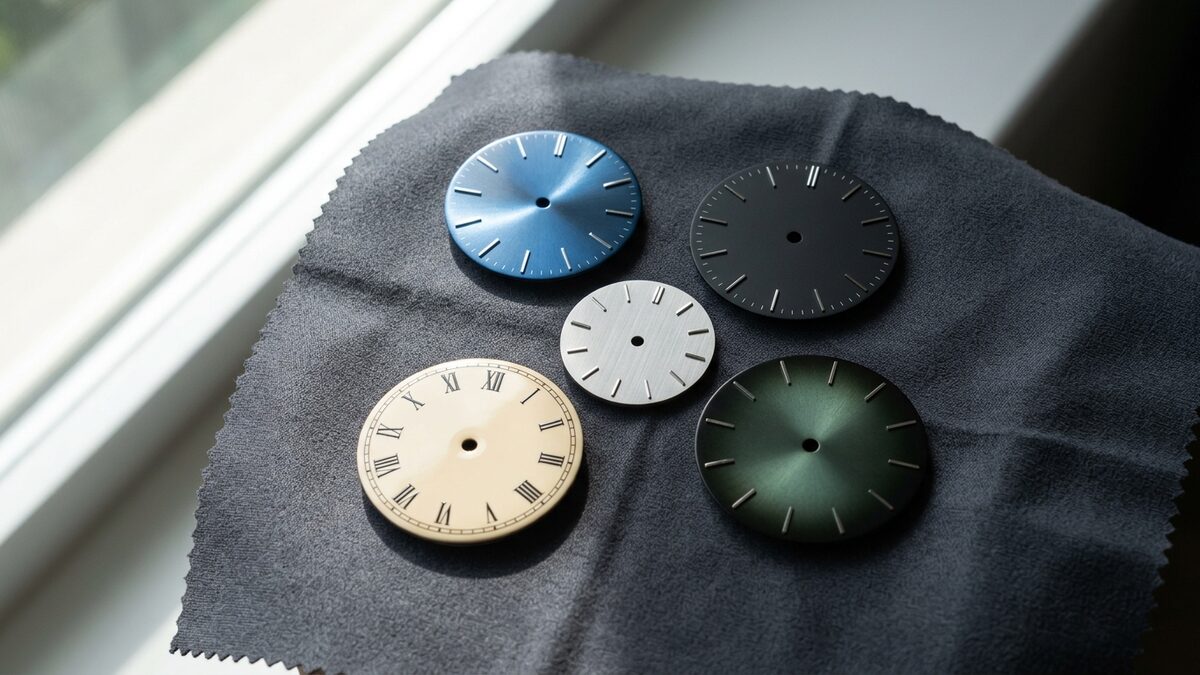
Here is the fun part of dial-watching: a dial is not just paint. It is a tiny piece of engineering meant to do something specific with the light it catches. A flat blue and a shimmering blue might be listed identically, yet one glows like a lagoon at noon and the other stays cool and quiet under the same lamp. Once you know what to look for, you can predict how a piece will behave before it ever ships to you.
This guide walks through the finishes you will meet most often when browsing, what each one does in real light, and how those differences translate into look, mood, and long-term appeal. Think of it as a reading list for surfaces, written for someone who wants to buy smart rather than memorize jargon.
The main dial finishes, from sunburst to fumé to enamel
Sunburst (also called sunray) is the crowd favorite for a reason. Fine brushed lines radiate out from the center, so the dial catches light in a bright fan that shifts as you turn your wrist. A sunburst blue looks nearly black in shadow and electric in sunlight, which is exactly why it photographs so well and why so many buyers fall for it in person. If you want a dial that feels alive and changes through the day, this is your starting point.
Matte takes the opposite approach. It scatters light evenly, so the color reads the same from almost every angle. Matte dials feel calm, legible, and a little tool-like, which suits field watches, divers, and anything you want to glance at without glare. A matte black is the honest workhorse of the dial world: no drama, just clarity.
Fumé (smoked) is the mood piece. The center stays light and the edges fade toward a darker rim, giving the dial depth like the bottom of a glass. Fumé works beautifully in gray, green, and burgundy, and because the gradient is applied by hand or by spray, no two are ever identical. If you like the idea of owning something with a bit of atmosphere baked in, fumé delivers it quietly.
Enamel is the heirloom-grade option. Grand feu enamel is fired at high heat in a kiln, layer by layer, producing a glassy surface with a glow that ages remarkably well. It resists fading over decades and carries a soft warmth that printed dials struggle to fake. Cloisonné and champlevé variants add color scenes or patterns within thin metal borders, turning the dial into a small painting. Enamel demands skill and patience to make, which is why it tends to sit at the top of a collection.
Two more worth knowing: guilloché, an engraved geometric pattern that plays with light in tight repeating waves, and lacquered dials, which use built-up layers for a deep, wet-looking gloss. Both can be combined with the finishes above, and that layering is exactly why the finish conversation gets interesting.
How to choose a dial finish, and what it means for value
Start with where and when you will wear the piece. If it is your daily watch checked under office lights and gray skies, a matte or lightly grained dial stays legible and never fights the room. If it is your going-out watch or your one nice piece, a sunburst or fumé gives you that shift of color that makes people ask about it. Matching the finish to the occasion is the single most useful habit a new buyer can build.
For gifting, the finish is your shortcut to personality. A crisp matte white reads classic and safe for someone with conservative taste. A green fumé or a warm salmon sunburst feels more expressive and suits a recipient who already enjoys a bit of flair. When you are choosing the best dial for a specific person rather than for a spec sheet, ask what they reach for now and lean one notch bolder.
On price and value, finishing is where a lot of your money actually goes. Enamel and hand-applied fumé cost more to produce and are harder to replace, which supports their standing over time. Sunburst and quality lacquer sit in a sensible middle, offering real visual payoff without the top-tier premium. Matte is usually the most accessible, and there is nothing wrong with that; a well-made matte dial can look far more expensive than it costs.
Do these finishes hold value? The short answer is that condition matters as much as the finish itself. Enamel is prized partly because it does not fade, so an unblemished enamel dial can stay desirable for a very long time. Printed and lacquered dials can be prone to aging spots or hairline cracks if abused, which is exactly what you want to inspect before buying.
Here is a quick checklist to run before you commit to any dial:
- Look at it in two light sources. A sunburst that dazzles in the shop may go flat under your kitchen light, and you want to know that first.
- Check the edges and the area under the crystal for spotting, cracks, or uneven lacquer pooling.
- Confirm the applied elements, markers and text, sit clean and level, since sloppy application shows fastest on glossy finishes.
- Consider legibility honestly. A gorgeous smoked dial can hide the hands in low light, which is a fair trade only if you know you are making it.
- Ask how the finish was produced. Kiln-fired enamel and hand-sprayed fumé are genuine value markers worth confirming.
The takeaway is simple and a little freeing: color gets you in the door, but finish is what you actually live with. Once you can name what a surface is doing with light, every browsing session gets sharper, and the piece you finally choose is the one that keeps rewarding a second glance.