
Sapphire, Mineral, Acrylic: A Buyer's Guide to Watch Crystals
The crystal is the part of a watch you look through every time you check the time, and it is also the part most likely to take the first hit when your wrist clips a doorframe. Three materials dominate the market: sapphire, mineral, and acrylic. Each has a personality, a price, and a failure mode worth understanding before you buy.
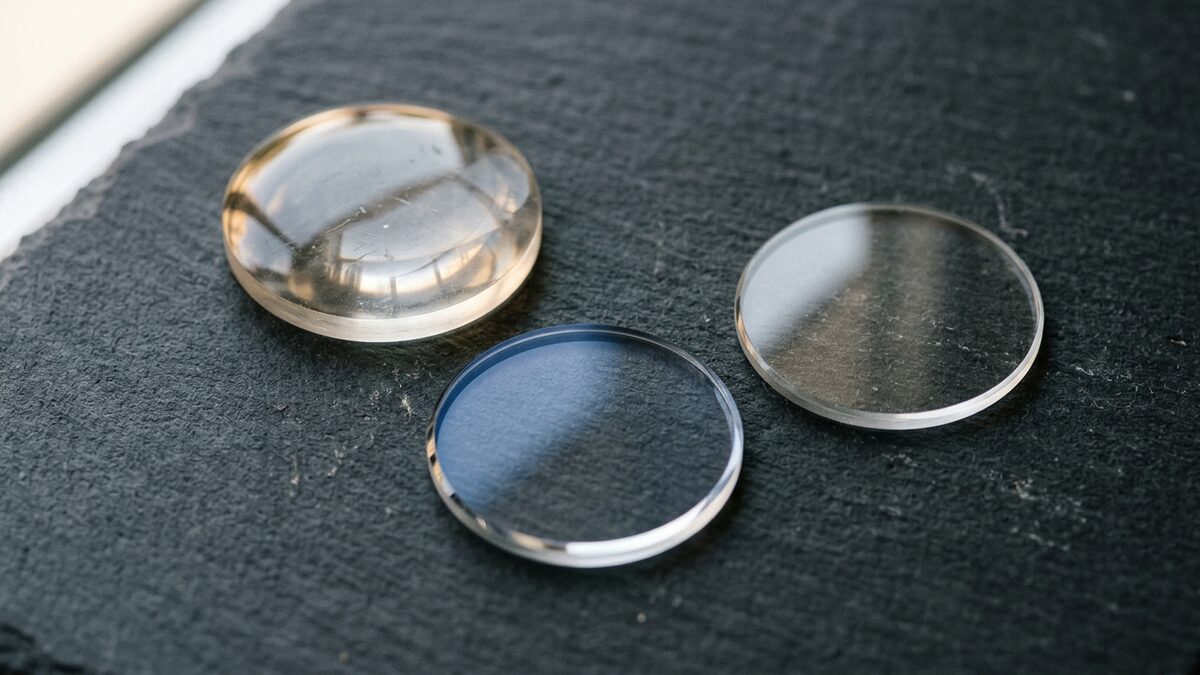
Sapphire is the headline act. Synthetic sapphire, grown in a lab from aluminum oxide, registers a 9 on the Mohs hardness scale, which means almost nothing in a typical environment will scratch it. Keys, coins, granite countertops, sand at the beach: sapphire shrugs them off. This is why nearly every modern watch above roughly two hundred dollars uses it, and why brands list it as a feature on the dial side and the caseback. If you want a watch that looks new after five years of daily wear without any thought from you, sapphire is doing most of that work.
The trade-off is brittleness. Hardness and toughness are different properties. Sapphire resists scratching because its atomic structure is rigid, but that same rigidity means a sharp impact can chip the edge or crack the face outright. A dropped sapphire watch hitting a tile floor at the wrong angle can produce a clean break across the dial, and replacing that crystal is rarely cheap. Expect to pay anywhere from eighty to several hundred dollars depending on shape, anti-reflective coating, and brand, plus labor for pressure-fitting and gasket replacement.
Mineral crystal is the middle path. It is essentially heat-treated glass, sometimes branded as Hardlex by Seiko or K1 by other makers, and it sits around 5 to 7 on the Mohs scale. That means it scratches more easily than sapphire but resists shattering better. Mineral crystals tend to develop hairline scuffs over years of wear rather than catastrophic cracks, and replacements typically cost a fraction of sapphire. For watches in the fifty-to-two-hundred-dollar range, mineral is a sensible default; for tool watches that get thrown at real work, some collectors actively prefer it because a scratched crystal you can ignore beats a shattered one you cannot.
Why acrylic still has a passionate following among collectors
Acrylic, also called Hesalite or simply plastic, is the oldest of the three and the easiest to underestimate. It scratches if you look at it sideways, but here is the trick: those scratches polish out with a tube of Polywatch and ten minutes of gentle rubbing. A vintage Speedmaster, an old Rolex bubbleback, a 1960s field watch, all of them wear acrylic by original design, and the warmth that domed acrylic adds to a dial is something neither sapphire nor mineral quite reproduces. Light bends through it differently. Photographs of acrylic-crystal watches have a softness that flat sapphire cannot match.
Acrylic also fails gracefully. Drop a watch with an acrylic crystal hard enough to crack it, and it usually crazes rather than shatters, often holding together long enough to keep moisture out until you can get it serviced. For pilots and astronauts in the 1960s, that mattered. NASA famously kept the Speedmaster on acrylic for moon missions partly for this reason, and Omega still sells the Moonwatch in both acrylic and sapphire variants for buyers who want the original feel.
So how should crystal type factor into a purchase decision? For a daily-wear modern watch you plan to keep ten years, sapphire with an inner anti-reflective coating is the safe call, and it holds resale value because secondary buyers expect it. For a beater or a vacation watch, mineral is fine and cheaper to replace. For a vintage piece or a deliberate homage, acrylic is part of the design language and changing it usually hurts the watch rather than helping. Servicing costs follow the same pattern: acrylic is the cheapest to replace, mineral is close behind, and sapphire is the most expensive but the least likely to need replacing in the first place.
One last consideration is anti-reflective coating, which appears on sapphire crystals and changes how the dial reads in sunlight. Inner-only coatings are durable and worth the upgrade. Coatings applied to the outer surface look spectacular in product photos but wear off with cleaning and abrasion, leaving patchy spots that look worse than no coating at all. If a listing mentions double-sided AR, ask whether the outer coat is something you actually want long-term.
Crystal choice is one of those specifications buyers skim past on the way to movement and case material, and then think about constantly once they own the watch. Spend a minute on it before you buy. The right answer depends on what you are buying the watch for, not on which material costs more.